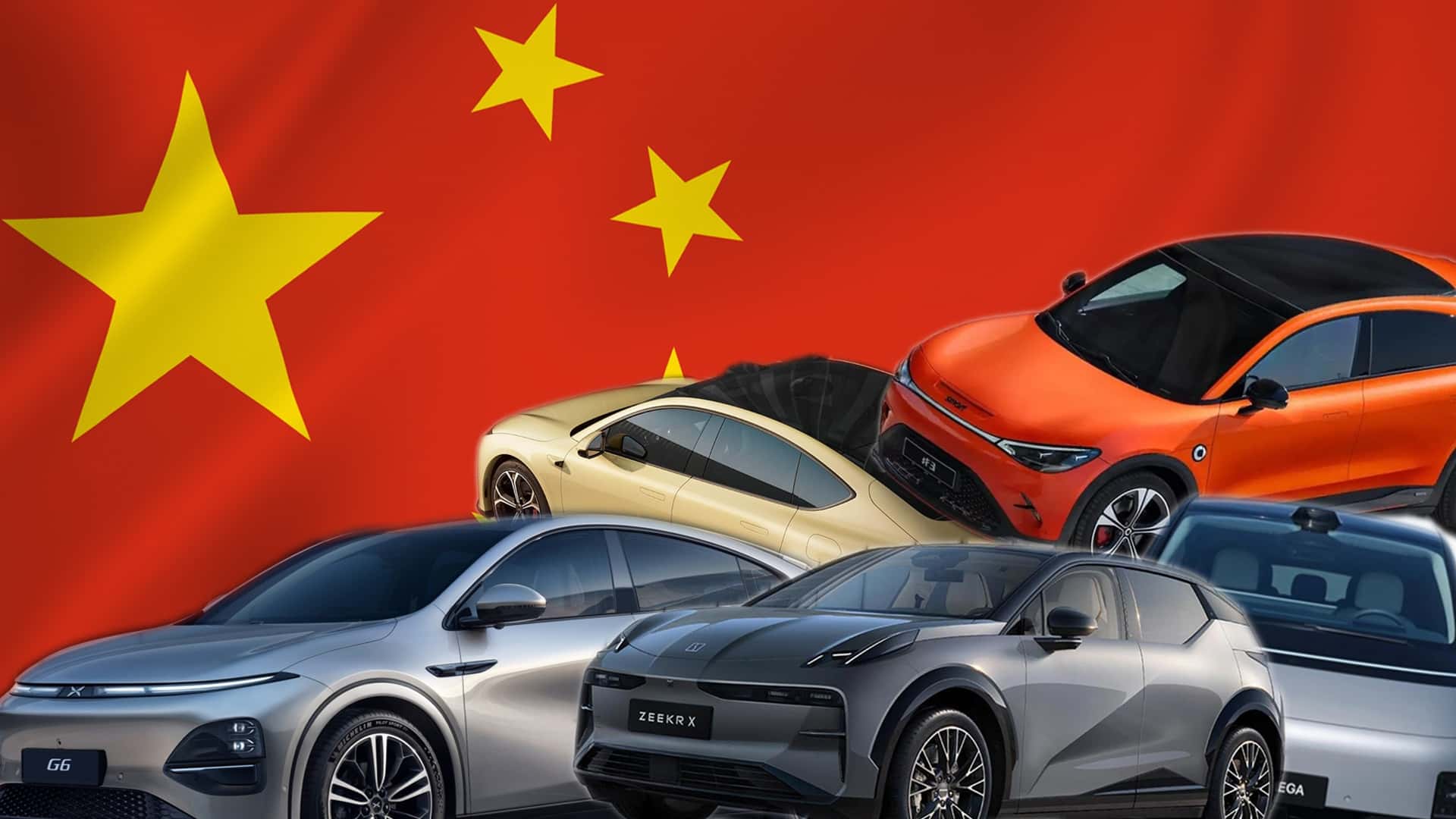
The global automotive landscape is witnessing a seismic shift in 2026. No longer just the world’s factory, China has emerged as a dominant force in vehicle exports, particularly in the electric vehicle (EV) sector. What was once a steady stream of shipments has turned into a flood, with Chinese original equipment manufacturers (OEMs) aggressively capturing market share from legacy automakers across Europe, Asia, and the Americas. This comprehensive rewrite explores the strategies, challenges, and unprecedented growth of Chinese EV brands as they solidify their presence on the world stage.
The Stellar Growth Trajectory of Chinese Automakers
The numbers coming out of China in early 2026 are staggering. Despite a temporary slowdown in domestic EV sales due to policy adjustments, the export market has become a powerhouse of growth. According to recent data, China’s EV manufacturers are not just participating in the global market; they are beginning to dominate it.
In January 2026 alone, major players reported remarkable figures. BYD, the country’s largest EV maker, announced overseas sales of approximately 100,000 passenger vehicles and pickup trucks, marking a massive 43.3% year-on-year increase . This figure now accounts for nearly half of their total monthly sales, highlighting how critical international markets have become for the Shenzhen-based giant . BYD is targeting the sale of 1.3 million vehicles outside Mainland China in 2026, a bold 24.3% increase from the previous year .
Similarly, other major groups are flexing their muscles. Geely’s overseas passenger vehicle sales soared by an astonishing 121% year-on-year in January, reaching 60,500 units . Chery Group, a long-time leader in Chinese automotive exports, continued its dominance by shipping 119,600 vehicles in the same month, marking the ninth consecutive month its exports have exceeded the 100,000-unit threshold . GAC is also accelerating rapidly, with overseas wholesale sales surging 69% year-on-year in January, setting the stage for an ambitious 2026 target of 300,000 units sold abroad .
This export boom is a strategic necessity. As the domestic market experiences cooling demand partly due to the introduction of new EV purchase taxes and reduced trade-in incentives for 2026 Chinese automakers are looking abroad to sustain their growth trajectories . The intense price war at home, while compressing profits, has forced these companies to become hyper-efficient, a trait that serves them well in international competition .
Strategic Localization: From Shipping to Making
One of the most critical evolutions in the strategy of Chinese automakers is the shift from simply exporting vehicles (CBU) to localizing production and supply chains . This “system expansion” is key to circumventing tariffs, building brand trust, and integrating into local economies.
Instead of just shipping finished cars, giants like BYD, Chery, and GAC are establishing manufacturing footprints across the globe. The benefits are threefold:
-
Avoiding Tariffs: Local assembly helps bypass hefty import taxes, such as the EU’s tariffs on Chinese EVs.
-
Cost Efficiency: Localizing the supply chain reduces logistics costs and currency fluctuation risks.
-
Market Trust: “Made locally” often resonates better with domestic consumers and governments.
A. BYD’s Global Footprint: BYD is aggressively building passenger vehicle manufacturing bases in key regions, including Thailand, Brazil, Hungary, and Uzbekistan, with projects underway in Cambodia as well . In Europe, the company is not only selling cars but is also constructing factories to serve the local market directly, reducing delivery times and tailoring vehicles to regional tastes .
B. GAC’s Expanding Network: GAC has already completed five overseas production facilities. The company is advancing projects in Cambodia, Brazil, and Egypt. A notable milestone is the AION UT project, which saw its first prototype roll off Magna’s factory line in Austria, demonstrating a sophisticated approach to European collaboration .
C. Chery’s Industrial Depth: With over two decades of export experience, Chery is solidifying its presence in Brazil, Russia, and Spain through CKD (Completely Knocked Down) assembly operations. The company is also planning a massive $800 million factory in Vietnam, aiming for an annual capacity of 200,000 vehicles to serve the Southeast Asian market .
This move toward localized manufacturing is also driving the overseas expansion of China’s supply chain. Contemporary Amperex Technology Co. Ltd. (CATL) and CALB are building gigafactories in Europe, ensuring that the batteries powering these vehicles can be produced locally, further integrating the “ecosystem” .
 Product and Technology Advantages
Why are consumers from Stuttgart to Sao Paulo choosing Chinese EVs? The answer lies in a combination of technological superiority, design innovation, and value for money. Chinese EVs are no longer seen as budget alternatives; they are tech-luxury commodities.
The “Smart EV” Edge
Chinese manufacturers moved early into electrification and intelligent technologies. The rapid iteration in batteries, smart driving assistance systems, and in-car ecosystems has given brands like BYD, Xpeng, and Nio a distinct first-mover advantage .
-
Battery Tech: BYD’s Blade Battery technology, known for its safety and durability, is a massive selling point. Similarly, the industry is pushing toward solid-state batteries, keeping Chinese tech at the forefront .
-
Software-Defined Vehicles: Chinese consumers’ appetite for digital integration has forced local OEMs to become world leaders in connected car technology. When these vehicles reach Europe or Southeast Asia, their intuitive interfaces and over-the-air (OTA) update capabilities often outclass traditional competitors .
Diversified Powertrains
Understanding that different markets have different levels of charging infrastructure, Chinese brands are not putting all their eggs in one basket. They are deploying a “three-pronged” approach involving:
-
Battery Electric Vehicles (BEVs): For mature markets like Western Europe and China’s megacities.
-
Plug-in Hybrid Electric Vehicles (PHEVs): For markets like the US and emerging economies where charging networks are still growing. BYD’s DM (Dual Mode) technology is a leader here .
-
Range Extenders: Offering a compromise that is gaining traction globally .
Regional Customization
Gone are the days of the “one car fits all” strategy. Companies are now designing vehicles for specific regional demands. GAC, for instance, ranks third among Chinese brands in Kuwait for large SUVs, catering to the Middle Eastern preference for powerful, spacious vehicles . Meanwhile, in Colombia, GAC retains a top-three position in overall EV sales by offering models suited for the local terrain and urban environments .
Navigating a Complex Global Landscape
The road to global domination is not without its potholes. Chinese automakers are navigating a complex web of geopolitical tensions, shifting regulations, and intense competition.
Regulatory Hurdles and Tariffs
The European Union has implemented tariffs on Chinese EVs to protect its domestic industry, with BYD facing a 27% tariff on pure electric models . Similarly, the United States has tightened subsidy qualifications, requiring higher levels of local content and raw material traceability .
To combat this, Chinese firms are playing the long game. Instead of absorbing the costs or retreating, they are doubling down on localization. By building factories in Hungary and setting up R&D centers in Germany, they are effectively turning themselves into “European” manufacturers to bypass restrictions .
Market Differentiation
The global market is polarizing into “quality” and “volume” zones.
-
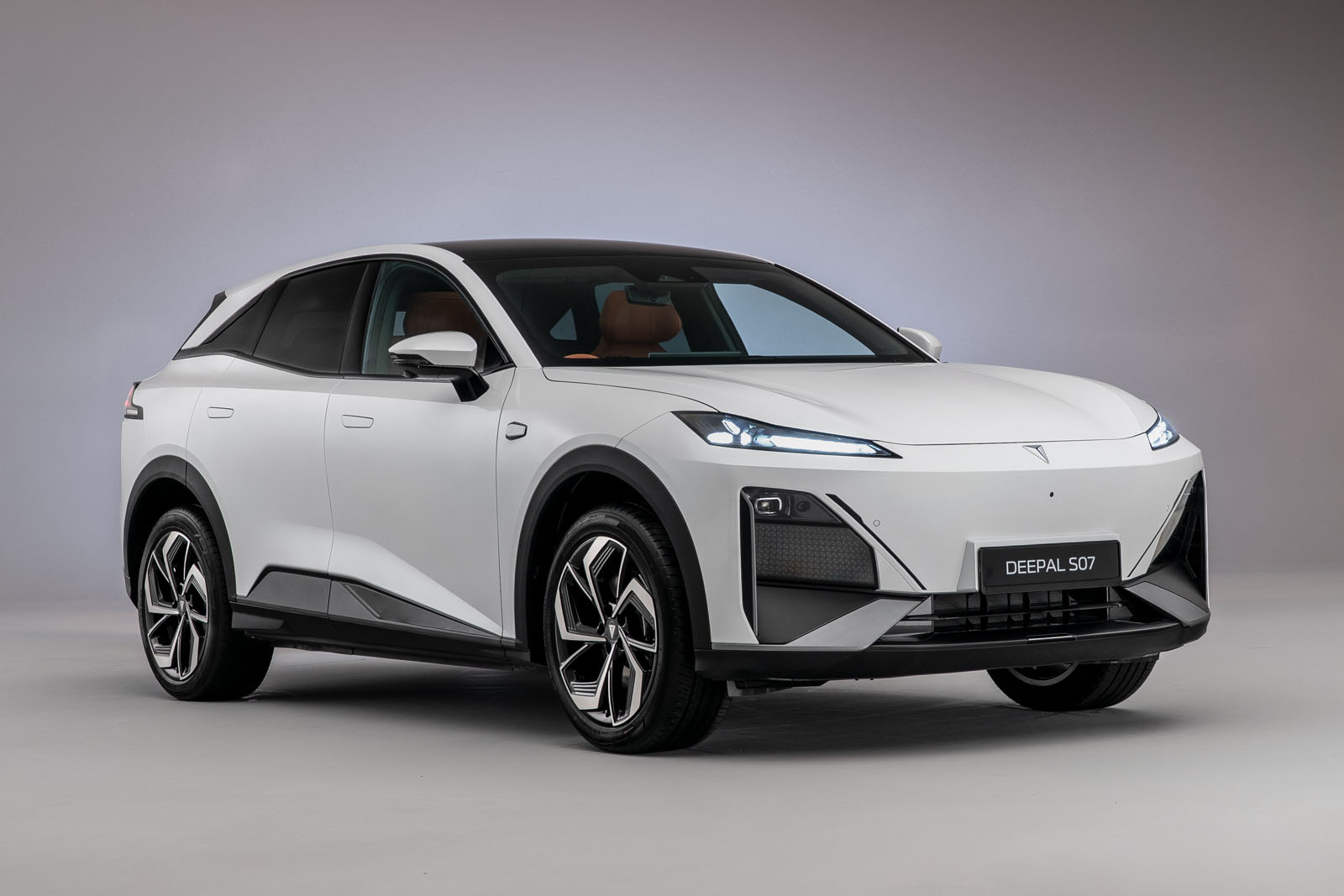
Mature Markets (Europe, North America): Here, the focus is on brand reputation, emissions compliance, and profitability. Chinese brands are moving away from the “cheap” label and introducing high-end models like the BYD Han or the Nio ET7 to compete with Mercedes and BMW .
-
Emerging Markets (ASEAN, Latin America, Middle East): These regions are the current growth engines. They have friendly trade policies and a high demand for affordable, feature-rich vehicles. Thailand, Indonesia, and Brazil are becoming hotbeds for Chinese EV sales, often fueled by local incentives for green transportation .
The After-Sales Challenge
Wu Shuocheng, a veteran automobile industry analyst, notes that building strong after-sales networks is crucial . Selling a car is just the beginning; winning market trust requires reliable parts supply and service support. Chinese firms are investing heavily in building dealership networks—GAC’s “Thousand-Network Plan” added 20 new overseas outlets in January 2026 alone, bringing its total to 650 outlets across 86 countries .
Key Players Leading the Charge
While BYD often grabs the headlines, a diverse range of players contributes to China’s export might.
-
BYD: The undisputed champion of electrification. With a vertically integrated supply chain (they make their own batteries and semiconductors), they control costs and quality better than anyone .
-
Chery: The export veteran. Chery has the most experience in navigating different regulatory environments and has a massive presence in Russia and the Middle East .
-
SAIC-GM-Wuling: This joint venture has found massive success with low-cost, small EVs like the Wuling Hongguang Mini EV, which is being adapted for various overseas markets .
-
GAC: Known for design and a dual-path strategy of hybrids and pure EVs, GAC is making significant inroads in the Middle East and the Americas .
-
Geely: As the owner of Volvo and a stakeholder in numerous global brands, Geely leverages its international pedigree to push its proprietary models overseas .
 The 2026 Outlook and Future Predictions
According to the China Association of Automobile Manufacturers (CAAM), China’s vehicle exports are expected to rise to 7.4 million units in 2026, with NEV exports playing a starring role . S&P Global predicts that Chinese-origin brands will account for approximately 27.4% of global vehicle production in 2026 .
However, the focus is shifting from quantity to quality. Experts like Wang Peng from the Beijing Academy of Social Sciences suggest that the future lies in “overseas ecosystem expansion” . This includes:
-
Financial Services: Offering loans and insurance packages tailored to local buyers.
-
Battery Swapping/Charging Networks: Nio is already leading this charge in Europe with its battery swap stations.
-
Second-Life Batteries and Recycling: Establishing circular economies for EV components.
The ultimate goal for these companies is to transition from being viewed as “Chinese carmakers” to being seen as “global carmakers originating from China.”
Conclusion
The conquest of global markets by Chinese EV brands is one of the most defining economic stories of the decade. Driven by saturated domestic markets, armed with superior technology, and protected by a resilient supply chain, companies like BYD, Chery, and GAC are changing the face of the automotive industry.
While challenges like tariffs, regulatory scrutiny, and cultural barriers remain, the shift from “exporting products” to “exporting systems” and localized production suggests that this is not a fleeting trend but a permanent restructuring of the global auto industry. As they continue to build factories in Europe, expand dealerships in South America, and dominate sales in Southeast Asia, Chinese automakers are not just participating in the global market they are actively redrawing its map.