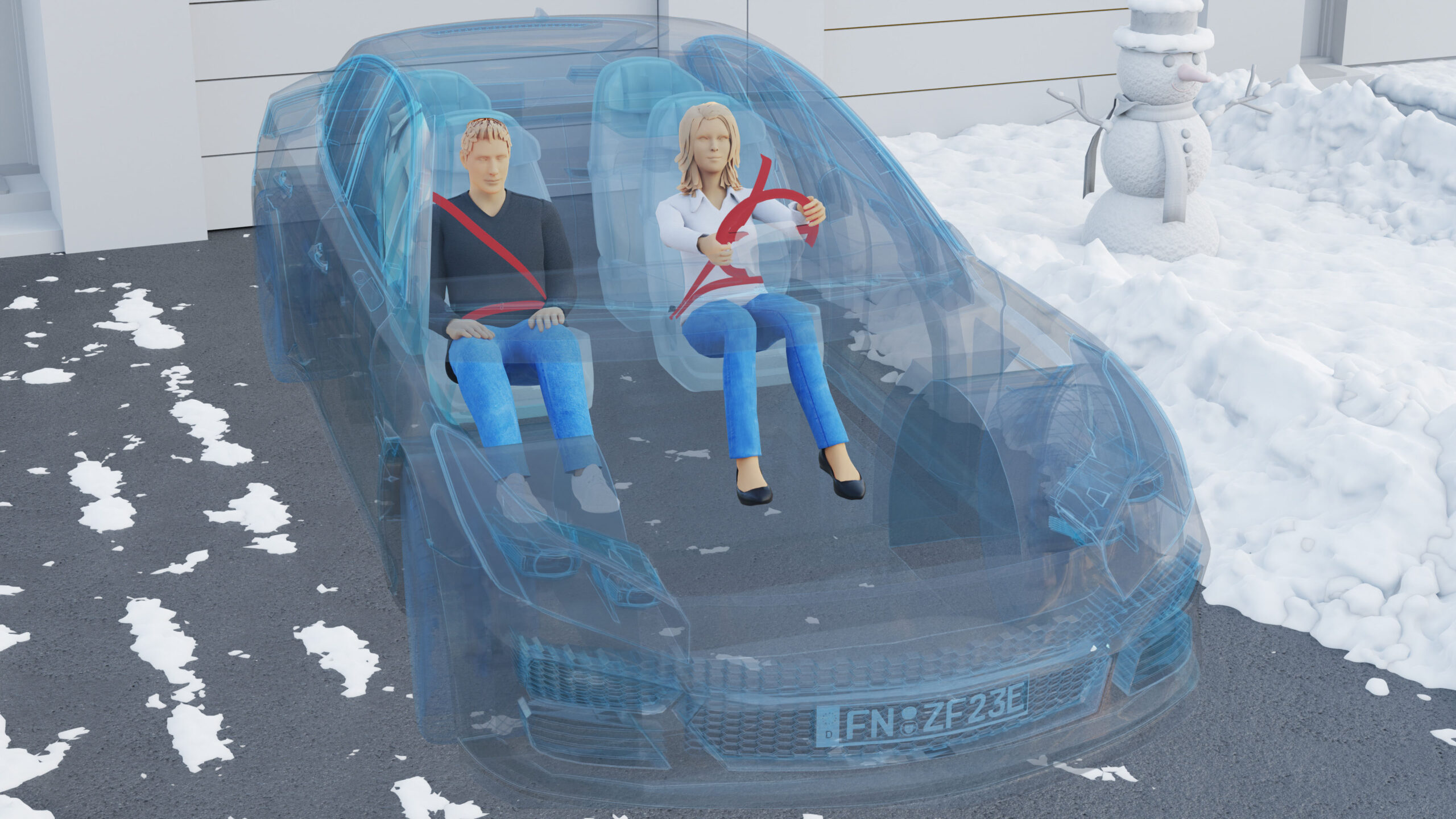
In the relentless pursuit of automotive innovation, manufacturers constantly seek to enhance the driving experience, blending luxury with cutting-edge technology. While features like heated seats and steering wheels have become commonplace, a new frontier in cabin comfort is emerging: the heated seatbelt. Far from being a frivolous luxury, this ingenious technology is rapidly evolving into a significant safety feature and a crucial tool for maximizing the efficiency of electric vehicles (EVs). This article delves deep into the world of heated seatbelts, exploring their mechanics, their surprising benefits, and their potential to redefine automotive comfort and sustainability.
The Genesis of Warmth: From Patent to Production
The concept of warming the very straps that secure occupants is not entirely new. Automotive innovators have been exploring this idea for years. For instance, Ford filed a patent for a heated seat belt system as early as 2018, envisioning a solution to the shock of a freezing cold belt on a winter morning . However, the journey from patent to production is complex, and it is suppliers and luxury manufacturers that have truly brought this technology to life.
Mercedes-Benz pioneered the feature’s introduction to the market, offering heated seat belts as an option in its flagship 2027 S-Class facelift. For Mercedes, this was a natural extension of its philosophy of holistic luxury, adding to an already extensive list of comfort features like heated armrests and the “Airscarf” . Simultaneously, major automotive safety technology suppliers, most notably ZF Lifetec, have been aggressively developing and refining their own versions. After introducing its initial “Heat Belt” in 2023, ZF unveiled the more advanced Heat Belt 2.0 in 2025, signaling a strong commitment to making this technology scalable and accessible across various vehicle segments . The global automotive seat belt market, valued at over $15 billion, is now identifying heated belt technology as a key growth trend, driven by both consumer demand for comfort and the specific needs of the EV market .
How It Works: The Technology of a Warm Embrace
At first glance, a heated seatbelt looks and feels much like a standard one. The magic lies in its intricate construction. The technology is a marvel of textile engineering, designed to integrate seamlessly without compromising safety.
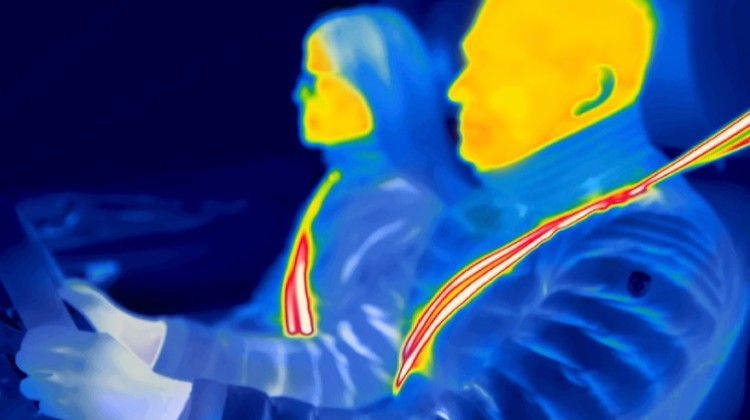
A. The Woven-In Heating Elements: The core of the system involves integrating ultra-fine, conductive wires directly into the fabric of the seatbelt webbing during the weaving process. For example, ZF’s design incorporates four heating conductors that run the length of the belt, covering the areas that rest against the occupant’s pelvis and chest . This method ensures the belt retains its original strength and flexibility. The overall thickness of the webbing increases only marginally—to about 1.3 millimeters—so it functions and retracts exactly like a conventional belt .
B. Intelligent Heating Control: Early versions of heated belts relied on a sensor within the webbing. However, next-generation systems, like the ZF Heat Belt 2.0, use a far more sophisticated approach. A patented algorithm acts as the brain of the operation. It calculates the optimal heat output in real-time by processing data from various vehicle sensors, including:
-
Occupant Core Temperature: Estimated baseline of 37°C (98.6°F).
-
Skin Temperature: Targeted range of 32–34°C (89.6–93.2°F).
-
Ambient and Cabin Temperature: How cold it is inside and outside the car.
-
Solar Load: The amount of sunlight entering the cabin, detected by sensors.
-
HVAC Settings: Data from the automatic climate control system.
This intelligent control allows the belt to warm up rapidly reaching a comfortable 40°C (104°F) from -5°C (23°F) in under two minutes and then automatically maintain that warmth without the occupant needing to adjust any settings . The maximum power draw is around 60 watts during the initial heat-up, but it averages only about 20 watts to maintain temperature, making it incredibly energy-efficient .
C. Seamless Vehicle Integration: Power is supplied to the belt through the buckle or the anchor point, ensuring that the electrical contacts do not interfere with the belt’s retraction mechanism. The system can be integrated with the vehicle’s existing comfort controls, allowing drivers to activate it via the seat heating menu or set it to turn on automatically when the exterior temperature drops below a certain point. Some advanced systems can even preheat the belts as the driver approaches the vehicle, detected by a proximity key fob, offering a truly welcoming “wow factor” .
 More Than Just Comfort: The Safety Connection
While the immediate benefit of a heated seatbelt is the luxurious feeling of a warm strap on a cold morning, its most profound impact may be on passenger safety. This feature cleverly addresses a dangerous winter driving habit: wearing bulky coats while buckled up.
A. The Danger of Puffy Coats: In cold weather, it is common for drivers and passengers to wear thick winter jackets, parkas, or puffers. In the event of a collision, the force of the impact compresses the fluffy material. This compression creates slack between the seatbelt and the occupant’s body. Before the belt can effectively restrain the person, it must first take up this slack, meaning the occupant travels forward a dangerous distance. This can lead to “submarining” (sliding under the lap belt) or increased head and chest impact with the steering wheel or dashboard.
A. Encouraging Safer Behavior: A heated seatbelt provides a strong incentive to remove bulky outer layers. The direct warmth against the body makes driving in just a sweater or shirt perfectly comfortable, eliminating the need for a thick coat. As Mercedes-Benz notes, the warmth delivers “a gentle, reassuring embrace,” transforming the cold morning routine . When occupants feel warm from the belt, seats, and steering wheel, they are far more likely to stow their coats in the back seat. With the coat removed, the belt lies flat and tight against the body, performing exactly as it was designed to in a crash .
C. A Legacy of Safety Innovation: This focus on combining comfort with protection continues a long tradition of seatbelt evolution. From Volvo’s groundbreaking three-point belt in 1959 to Mercedes’ introduction of pretensioners in the 1980s and Ford’s inflatable rear belts in 2009, each innovation has made the system more effective . The heated seatbelt is the latest step, using comfort as a direct tool to encourage proper usage.
The “Killer App”: Boosting Electric Vehicle Range
Perhaps the most compelling argument for the widespread adoption of heated seatbelts is their potential to significantly increase the driving range of electric vehicles, especially in cold weather. Cold temperatures are the nemesis of EV range, sometimes reducing it by up to 30% . A major reason for this is the energy required to heat the cabin.
A. The Efficiency of Conductive vs. Convective Heating:
-
Internal Combustion Engine Vehicles: These generate a massive amount of waste heat, which is used for free to warm the cabin.
-
Electric Vehicles: Every watt of energy used for cabin heating comes directly from the traction battery, reducing the power available to turn the wheels. Traditional HVAC systems heat the air (convection), which is an energy-intensive process, drawing 5-6 kW or more to warm a cold cabin .
Heated seatbelts, like heated seats and steering wheels, use conductive heating. They warm the occupant directly through contact, rather than warming the air around them. This is vastly more efficient.
B. Quantifiable Range Gains:
By warming the occupants directly, the cabin does not need to be as warm to achieve the same level of comfort. ZF estimates that with close-contact heating systems, the interior air temperature can be reduced by about 3°C (5.4°F) without any loss of comfort for the passengers . This reduction in demanded cabin temperature translates directly to energy savings. During the initial heat-up phase of a journey—which is when the HVAC system works hardest—the savings are most dramatic. The heating power required from the HVAC can be reduced by up to 1,000 watts (1 kW) .
Over a full journey, this can lead to a range improvement. ZF’s Heat Belt 2.0 claims to improve range by up to 6% in cold weather . Other estimates, including earlier projections from ZF, suggest that in combination with heated seats and a heat pump, the total range gain could be as high as 15% . For an EV with a 300-mile range, a 15% gain equates to an extra 45 miles—a significant buffer against range anxiety.
| Feature | Heated Seatbelt | Heated Seat | Traditional HVAC |
|---|---|---|---|
| Heating Method | Conductive (direct contact) | Conductive (direct contact) | Convective (air heating) |
| Typical Power Draw | ~20-70 Watts | ~50-100 Watts | ~3,000-7,000 Watts |
| Target Area | Torso, Chest, Pelvis | Back, Thighs | Entire Cabin Air |
| Primary Benefit | Safety, EV Range, Core Warmth | Comfort, Local Warmth | Cabin Defrosting, Ambient Warmth |
| Impact on EV Range | High Positive Impact (up to +15%) | Moderate Positive Impact | High Negative Impact (up to -30%) |
Consumer Demand and Market Potential
The technology is not just a solution looking for a problem; early market research indicates genuine consumer interest. Studies by firms like AutoPacific show that when offered at a hypothetical price point of $250, nearly a quarter (23%) of new vehicle buyers would want a heated seatbelt on their next car .
Unsurprisingly, demand is highest among demographics that would benefit the most:
-
EV Intenders: Those planning to buy an electric vehicle are 5% more interested than internal combustion engine buyers, likely due to awareness of winter range loss .
-
Families: Households with children show a 7% higher interest, possibly valuing the extra comfort and safety encouragement for younger passengers in the back seat .
-
SUV Buyers: Owners of large SUVs and crossovers, vehicles often used for family trips and in varied weather conditions, also show high demand .
As the technology matures and production scales, the cost is expected to decrease, making it a viable option in mid-range vehicles and not just a luxury reserved for flagship sedans like the Mercedes-Benz S-Class. ZF explicitly designed its Heat Belt 2.0 for integration into vehicles “spanning all segments from small cars to luxury models” .
 Conclusion: A Small Feature with a Big Future
Heated seatbelts represent a perfect synergy of luxury, safety, and efficiency. What might appear at first glance as an unnecessary indulgence is, in reality, a thoughtfully engineered feature that addresses some of the most pressing issues in modern automotive design. By encouraging drivers to ditch bulky winter coats, it acts as a silent guardian, enhancing safety without a single word of instruction. By warming the person instead of the planet, it offers a tangible solution to the EV industry’s cold-weather range problem.
As the technology moves from the pages of patents and the floors of auto shows to the production lines of major automakers, the heated seatbelt is poised to become not just a niche curiosity, but a standard bearer for intelligent automotive comfort in the electric age. It transforms a passive safety device into an active comfort component, ensuring that the journey is not only safer but also noticeably more pleasant, regardless of the weather outside.