The automotive world is witnessing a remarkable resurrection. One of the most evocative names in British motoring history, the Jensen Interceptor, is poised for a stunning return in 2026. This is not merely another story of a classic car being resurrected through a half-hearted badge engineering exercise. Instead, it is a bold and passionate project helmed by Jensen International Automotive (JIA) , the Banbury-based custodian of the Jensen legacy . After decades of specializing in the restoration and re-engineering of original Interceptors, JIA is embarking on its most ambitious project yet: a “clean-sheet” luxury Grand Tourer (GT) that draws inspiration from the iconic 1960s model while forging a distinct identity for the 21st century .
This new vehicle arrives at a time when the automotive industry is rapidly pivoting towards electrification. In a landscape increasingly dominated by silent powertrains and digital interfaces, the new Jensen stands as a defiant celebration of analogue driving. It promises a deeply immersive experience centered around a bespoke V8 engine, an aluminium chassis, and a hand-built, ultra-exclusive nature . This article delves deep into the history of the Interceptor, explores the philosophy behind its rebirth, and analyzes what enthusiasts can expect from this thoroughly modern take on a British legend.
A Legacy Forged in Steel and V8 Power
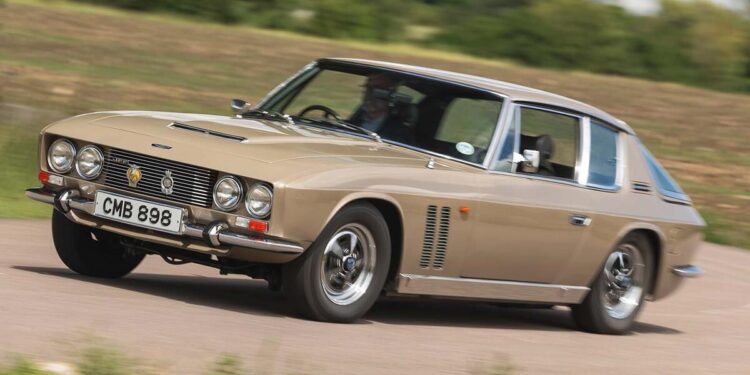
To understand the significance of the 2026 model, one must first appreciate the legacy of the original Jensen Interceptor. Produced between 1966 and 1976 by Jensen Motors in West Bromwich, the Interceptor broke the mold for British sports cars . While many of its contemporaries relied on smaller, more frugal powerplants, Jensen took a transatlantic approach. Under the long, louvered bonnet lay a massive Chrysler V8 engine, initially a 6.3-liter (383 cubic inch) unit and later a thumping 7.2-liter (440 cubic inch) big-block . This “American muscle in a British suit” formula gave the Interceptor effortless performance, with later models producing upwards of 330bhp and achieving 0-60 mph times that could embarrass many exotics of the era .
However, the Interceptor was far more than just a straight-line bruiser. Its design, penned by the legendary Italian styling house Carrozzeria Touring, was its crowning glory . The body, initially built by Vignale before production moved in-house, was a masterpiece of proportion. It featured a fastback “shooting brake” silhouette that was both elegant and purposeful. The most distinctive design element was the vast, wraparound rear glass, which doubled as a tailgate, creating a hatchback that was decades ahead of its time . The interior was a sanctuary of wood, leather, and deep-pile carpets, cementing its status as a true luxury GT .
Adding to its mystique was the technically extraordinary Jensen FF (Ferguson Formula), introduced in 1966. It became the first non-off-road production car in the world to feature both four-wheel drive and an anti-lock braking system (ABS), a full decade before the Audi Quattro popularized the technology . Despite its brilliance, Jensen Motors succumbed to financial difficulties in 1976, bringing an end to the original production run. Yet, the car’s bold character and unforgettable design ensured it lived on in the public consciousness, with the name “Interceptor” becoming shorthand for a uniquely charismatic breed of British GT .
 The Custodians: Jensen International Automotive (JIA)
The story of the Interceptor didn’t end in the 1970s. The marque has seen several revival attempts over the decades, but the most credible and successful has been the work of Jensen International Automotive. Founded in 2010 with backing from Carphone Warehouse co-founder Charles Dunstone, JIA set up its headquarters in Banbury, Oxfordshire, the heart of the UK’s motorsport and engineering valley .
For the past 15 years, JIA has not been building new cars but perfecting the art of the “restomod.” They take original Interceptor chassis and perform concours-quality restorations, fundamentally re-engineering them with modern running gear . Their builds, such as the Interceptor R, typically replace the original (and often thirsty and unreliable) Chrysler V8 with a modern, powerful, and more efficient General Motors LS3 V8, mated to a six-speed automatic transmission . As Top Gear noted in their review of a JIA-built car, the transformation is dramatic, creating a car that is “dangerously addictive” to drive, with the power-to-weight ratio of a Porsche 911 Carrera S, but with a “period driving experience, and all the better for it” .
This extensive experience in rebuilding and improving the Interceptor has given JIA an unparalleled understanding of the model’s strengths and weaknesses. They have lived and breathed the car for years, building a loyal clientele and perfecting their engineering processes. It is this deep, hands-on knowledge that has emboldened them to take the ultimate step: creating their own car from the ground up .
The 2026 Rebirth: A Clean-Sheet Philosophy
The new model, slated for a 2026 release to mark the 60th anniversary of the original’s launch, represents a pivotal moment . JIA’s Managing Director, David Duerden, has been emphatic about what this car is not. “This is certainly no ‘restomod’ or ‘continuation’,” he stated, “and will stand proudly as a completely all-new car in its own right” . This is a crucial distinction. A restomod starts with an existing classic and upgrades it. This new Jensen is a ground-up, “clean-sheet” design, engineered and built by JIA using modern techniques and materials .
The philosophy is clear: to capture the spirit and “theme” of the original Interceptor—a long-bonnet, luxurious, V8-powered GT—and translate it into a thoroughly modern context. It is about creating an “ultra-high-performance, luxury Grand Tourer” that delivers an unmatched driving experience for a new generation of connoisseurs .
Exterior Design: A Silhouette of Intent
While the car remains cloaked in secrecy, JIA has released a single, evocative teaser image that speaks volumes . The profile reveals a car that instantly conveys the Interceptor’s genetic lineage. Key design elements are expected to include:
-
The Proportions: The silhouette is dominated by a long, powerful bonnet, a low-slung body, and a fastback, raked roofline that flows into a short rear deck. This classic GT architecture is a direct nod to the original.
-
The Glass House: The teaser shows a thin, elegant daylight opening (DLO) that sweeps around the rear of the car. While modernized with thin LED lighting units, this strongly hints at a modern interpretation of the original’s famous wraparound rear screen.
-
Modern Detailing: The car is not retro. It features contemporary elements like a prominent front splitter, a rear diffuser, and sharp, minimalist LED light bars. Some observers have noted that the light signature has echoes of modern designs from the likes of Jaguar and Lucid, proving this is a forward-looking design, not a nostalgic pastiche .
-
Coachbuilt Presence: Built in ultra-low numbers, each car will be handcrafted, ensuring a level of detail, quality, and exclusivity that mass-produced vehicles cannot match .
Engineering and Performance: The Heart of the Matter
In an era of downsizing and electrification, the new Jensen’s powertrain choice is a bold statement. The heart of the car will be a “bespoke” V8 engine . While JIA is keeping the exact specifications close to its chest, speculation is rife. Given JIA’s history with GM powertrains in its restomods, many suspect the engine will be a heavily modified and fettled version of the 6.2-liter LT2 V8 found in the Chevrolet Corvette C8 . In standard form, this engine produces 495bhp, and it’s almost certain that JIA will tune it further to create a unique “bespoke” power unit that delivers the effortless torque and sonorous roar that Interceptor buyers demand .
The engineering highlights are expected to include:
-
A. A Lightweight Aluminium Chassis: The new GT will be built on a state-of-the-art aluminium chassis. This is a critical component, as it will provide a stiff, safe, and lightweight foundation, contributing directly to the car’s performance and handling agility while keeping weight in check—a stark contrast to the heavy steel monocoque of the original .
-
B. A Fully Analogue Driving Experience: This is perhaps the most intriguing aspect of the new car. JIA promises an experience that is “fully analogue” . In a modern context, this suggests a deliberate move away from overwhelming digitalization. Enthusiasts can hope for:
-
A rich, naturally aspirated or subtly forced V8 soundtrack that is channeled into the cabin.
-
Hydraulic power steering to provide authentic feel and feedback from the road.
-
A manual transmission option, or at the very least, a dual-clutch or traditional automatic that prioritizes driver control and engagement over imperceptible shifts.
-
An interior that, while luxurious, relies on physical switches and controls rather than burying every function in a touchscreen, paying homage to the original’s driver-focused layout .
-
-
C. Bespoke V8 Powertrain: The engine will be unique to JIA, developed to provide the “muscle car” feel of the original with the reliability, power, and efficiency of a modern power unit .
-
D. Hand-Built Exclusivity: Production will be strictly limited, with each car being hand-assembled at JIA’s facilities in Banbury. This ensures a level of personalization and quality control befitting a six-figure luxury GT .
The following table summarizes the key specifications of the original and the new Interceptor, based on current information:
| Feature | Classic Jensen Interceptor (1966-1976) | New Jensen GT (2026) – Projected |
|---|---|---|
| Chassis | Steel monocoque | Bespoke aluminium |
| Engine | Chrysler V8 (6.3L / 7.2L) | Bespoke JIA V8 (likely GM-based) |
| Power Output | 300 – 385 bhp | 495+ bhp (projected) |
| Drivetrain | Rear-Wheel Drive / 4WD (FF model) | Rear-Wheel Drive |
| Production | ~6,400 units | “Ultra-low numbers,” hand-built |
| Philosophy | Original Italian-designed British GT | Modern interpretation, not a restomod |
Market Position and Exclusivity
The new Jensen will not be for the masses. JIA has confirmed it will be built in “ultra-low numbers” and targeted specifically at the UK market and discerning collectors worldwide . This strategy positions it firmly in the realm of boutique, high-end luxury goods. While no official price has been released, estimates place the cost at a minimum of £390,000, based on the price of a fully restored JIA Interceptor R . This stratospheric price tag places it in competition with the world’s finest grand tourers from the likes of Bentley, Aston Martin, and Ferrari. However, the new Jensen offers something unique: a direct, unbroken lineage to a classic British icon, combined with the exclusivity of a hand-built, low-volume special.
 The Challenges and the Future
The path to production is fraught with challenges. Reviving a car brand is notoriously difficult, and the automotive landscape is littered with failed projects. Jensen itself has seen attempted comebacks before, most notably the Jensen S-V8 in the early 2000s, which failed to gain traction, and a 2011 proposal that never materialized . JIA’s credibility and proven track record over the past 15 years, however, provide a solid foundation that previous revivalists lacked .
Furthermore, creating a “clean-sheet” car requires immense capital, engineering expertise, and supply chain management. JIA will need to navigate global parts sourcing, stringent modern safety and emissions regulations (a particular challenge for a small-volume manufacturer), and the complex process of type-approval.
Despite these hurdles, the prognosis is positive. The target audience of wealthy collectors and enthusiasts is increasingly seeking unique, driver-focused experiences over mass-produced luxury goods. The promise of an analogue V8 GT in an increasingly digital and electric world is a powerful differentiator.
Conclusion
The rebirth of the Jensen Interceptor is one of the most exciting automotive stories of the decade. It is a tale of passion, heritage, and a steadfast commitment to a pure driving ideal. By leveraging decades of experience, Jensen International Automotive is not just reviving a name; they are resurrecting a philosophy. The 2026 model promises to be a stunning, hand-built, V8-powered Grand Tourer that honors the spirit of its 1960s ancestor while standing proudly as a thoroughly modern creation. For those who value analogue engagement, bespoke craftsmanship, and the thunderous soundtrack of a V8, the new Jensen may well be the ultimate expression of the luxury British GT. It is a car built not for the screen, but for the open road, ensuring that the legend of the Interceptor will continue to captivate drivers for another 60 years.