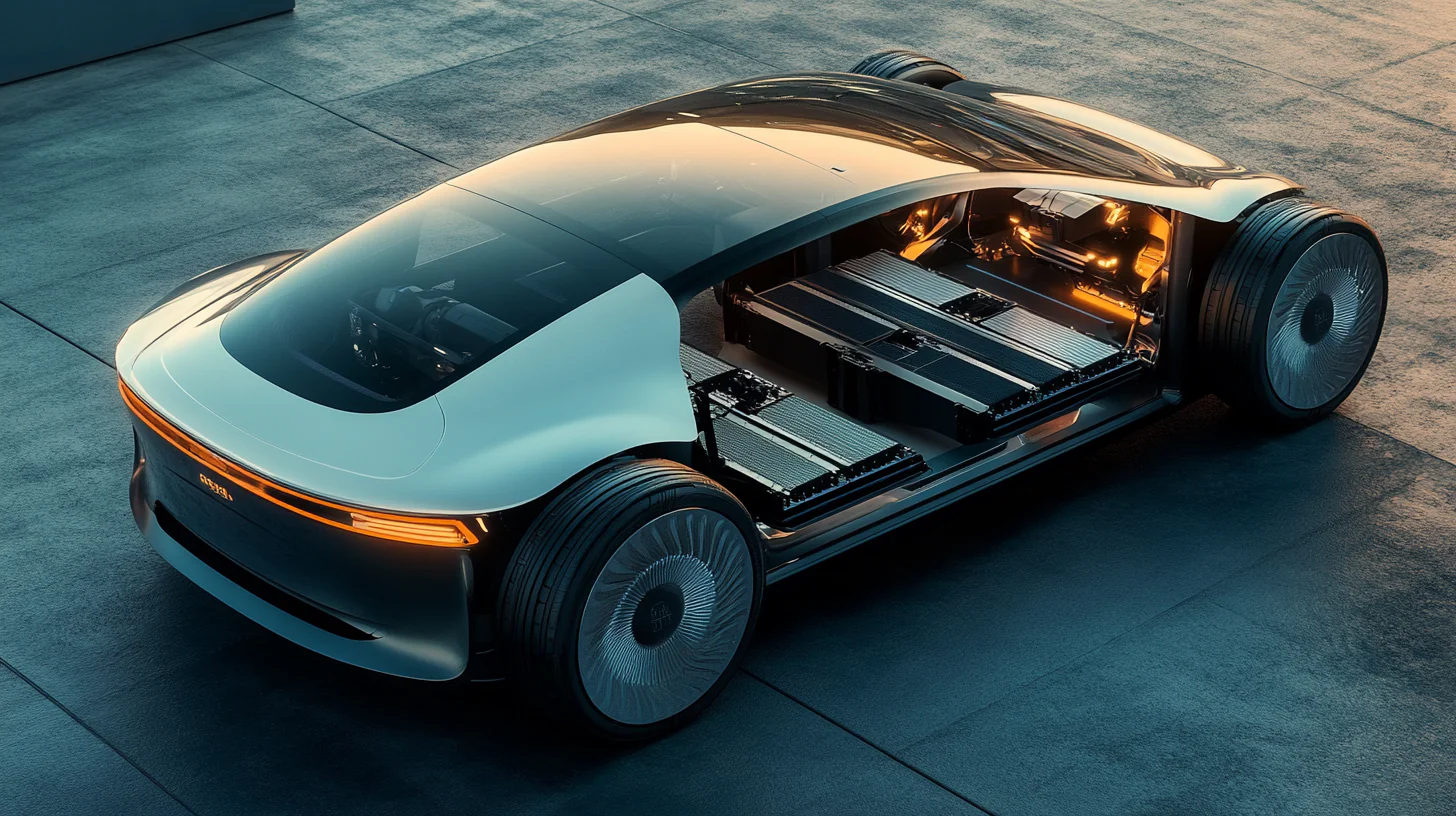
The race to dominate the next generation of electric vehicle (EV) technology is entering a critical phase. While lithium-ion batteries have powered the current EV revolution, the industry is collectively holding its breath for the advent of solid-state batteries (SSBs). Often dubbed the “holy grail” of energy storage, solid-state technology promises to deliver higher energy density, dramatically faster charging times, and superior safety compared to conventional liquid-electrolyte batteries .
However, the journey from laboratory breakthrough to mass-produced, road-ready technology is fraught with engineering challenges. The current buzzword in the industry is no longer just “research and development”—it is validation. In recent months, a surge of announcements from South Korea, Finland, China, and the United States indicates that solid-state batteries are moving out of the lab and into the real world for rigorous testing. This article delves into the latest developments in solid-state battery validation, exploring how different companies are approaching the final hurdles before commercialization.
The Shift from Pilot Lines to Public Roads
For years, solid-state batteries were theoretical marvels confined to academic papers. Today, they are being installed in prototype vehicles, tested by independent research centers, and undergoing site acceptance procedures on advanced pilot lines. This shift marks a significant maturation of the technology.
SK On and Solid Power: Accelerating Pilot Production
In South Korea, one of the most significant developments comes from battery maker SK On and its American partner, Solid Power. The companies are fast-tracking their timeline to commercialize all-solid-state EV batteries. Initially targeting mass production for 2030, SK On has moved its goalpost forward to 2029, signaling growing confidence in its technology roadmap .
The heart of this acceleration lies in Daejeon, where SK On’s pilot line is set to begin operation. Solid Power CEO John Van Scoter revealed that the companies are finalizing the Site Acceptance Testing (SAT) process. SAT is a crucial validation step, ensuring that newly installed, highly specialized manufacturing equipment operates as intended under real-world conditions. Unlike standard lithium-ion lines, solid-state pilot lines typically require six months to a year to become operational due to the complexity of handling electrolyte materials. SK On, however, has managed to compress this timeline significantly, completing the process in just months .
A key advantage driving this efficiency is the technology itself. Solid Power’s sulfide-based solid electrolytes are designed to be compatible with the existing roll-to-roll electrode-coating equipment already ubiquitous in lithium-ion battery production. This compatibility allows manufacturers to upgrade existing lines with minimal adjustments, avoiding the massive capital expenditures typically associated with a full technology overhaul. This “drop-in” compatibility is currently being validated, demonstrating that solid-state production can scale without reinventing the entire manufacturing wheel .
Donut Lab’s Independent Verification
While SK On focuses on manufacturing processes, Finnish technology company Donut Lab is taking a different route to validation: independent, third-party testing. Recently, Donut Lab commissioned the VTT Technical Research Centre of Finland to conduct an unbiased analysis of its “Donut Battery” .
The results, which focus on charging speed and thermal behavior, are striking. The test simulated a worst-case scenario where the battery cell lacked active temperature controls, allowing its temperature to rise freely at extremely high charging rates. Under these conditions, the Donut Battery lived up to its promises. The measurements showed:
-
A. At a 5C charging rate, the battery reached an 80% state of charge in approximately 9.5 minutes and a full charge in just over 12 minutes, retaining 100% of its capacity upon discharge.
-
B. At an extreme 11C rate, it charged from 0 to 80% in just 4.5 minutes, reaching full charge in seven minutes. Even at this extreme speed, 98.4% to 99.6% of the battery capacity was available for use .
This validation is crucial because it addresses a major skepticism about fast charging: degradation. Typically, force-feeding a battery that quickly degrades the chemistry instantly. The VTT results suggest that the Donut Battery’s architecture, which does not require the high compressive pressures usually needed by other solid-state designs, effectively manages heat and structural stress .
 Chinese Automakers Lead the Charge in Vehicle Integration
Perhaps the most aggressive push for validation is coming from China, where automakers are not just testing cells, but entire battery packs integrated into vehicles. This represents the final step before mass production.
Geely’s Roadmap to 400 Wh/kg
Geely Auto has provided rare visibility into its internal roadmap. The company has confirmed that its first fully integrated all-solid-state battery pack will be completed in 2026. Following assembly, the pack will be installed in a vehicle to undergo validation under real operating conditions .
Geely’s experimental solid-state cells have already reached energy densities of about 400 Wh/kg—significantly higher than the 200-260 Wh/kg of standard NMC lithium-ion cells. To achieve this, Geely is consolidating its operations under a new unit, Zhejiang Jiyao Tongxing Energy Technology, and has established a Solid-State Battery Joint Laboratory in Zhejiang. The company is testing various electrolyte types, including sulfide and oxide-based materials, to determine the optimal chemistry for performance and safety .
Changan’s Dual-Purpose Validation
Changan Automobile is taking an innovative approach to validation by planning to install its Jinzhongzhao solid-state batteries in both robots and vehicles for testing before the third quarter of 2026 .
This dual-purpose strategy allows for rapid iteration. Robots and automated guided vehicles (AGVs) can provide high-frequency cycle data in controlled environments, acting as a proving ground before the batteries are subjected to the variable demands of automotive use. Changan aims to advance all-solid-state batteries toward mass production by 2027, targeting an energy density of 400 Wh/kg and a range of over 1,500 kilometers. The company claims that by leveraging AI-powered remote diagnostics, it has enhanced the solid-state battery’s safety by 70% compared to traditional liquid batteries .
Dongfeng’s Extreme Cold Weather Trials
Battery performance in winter conditions has long been a pain point for EV owners. Dongfeng is addressing this head-on by testing its solid-state prototypes in extreme cold. The company sent vehicles equipped with 350 Wh/kg solid-state batteries to Mohe in Heilongjiang Province, one of China’s coldest regions, where temperatures plummet to between -40°C and -30°C .
These winter tests are designed to validate laboratory results in real-world snow and ice. Dongfeng reports that its battery retained up to 72% of its energy at -30 degrees Celsius, a figure that would be groundbreaking for current EV batteries, which often see significant range loss in winter. This validation step is critical for proving that solid-state technology can not only outperform liquid batteries in energy density but also solve the environmental vulnerabilities associated with them .
The Science of Validation: How to Test a Solid-State Battery
As these companies push toward production, the underlying science of how to test a solid-state battery has also evolved. Testing a solid-state battery is fundamentally different from testing a lithium-ion cell due to the physical properties of the solid electrolyte.
The Critical Current Density (CCD) Test
One of the most vital metrics in solid-state battery validation is the Critical Current Density (CCD) . CCD represents the maximum current density that a solid-state electrolyte can withstand before an internal short circuit occurs, typically caused by the penetration of lithium dendrites .
Lithium dendrites are needle-like structures that can grow from the anode. In liquid batteries, the electrolyte is flexible, but solid-state batteries rely on the hard electrolyte to physically block these dendrites. However, research shows that lithium can grow along grain boundaries or through micro-cracks in the solid material.
The CCD test procedure, often conducted using a lithium symmetric cell, follows a step-wise method:
-
A. The test starts at a very low current density (e.g., 0.1 mA/cm²).
-
B. The current is increased incrementally after every charge-discharge cycle (stripping and plating).
-
C. Technicians monitor the voltage response in real-time.
-
D. The endpoint or the CCD limit is identified by a sudden voltage drop to near zero or erratic voltage oscillations, indicating that a dendrite has bridged the anode and cathode .
This test is essential for determining whether a solid-state battery can support the ultra-fast charging speeds (like those demonstrated by Donut Lab) without failing.
Toyota’s Patent-Pending Detection Methods
Beyond performance testing, manufacturers must ensure manufacturing quality. Toyota has developed patented methods for testing all-solid-state batteries to detect the presence of short circuits or defects (such as foreign substances) that could cause failure .
The method involves a specific process to increase the battery’s resistance sometimes through freezing treatments—before applying voltage. By increasing the resistance to a specific threshold (e.g., 3.2*10⁸ Ω·cm²), the internal electrochemical reactions are inhibited, allowing testers to apply voltage and measure current flow without “activating” the battery. This non-destructive method can detect minute short circuits or contaminants that might otherwise go unnoticed until it is too late .
This level of scrutiny is vital for battery safety. In a conventional battery, a foreign substance might only cause issues after hundreds of charge cycles. In a solid-state battery, where the electrolyte is rigid, a contaminant could immediately cause a crack, leading to dendrite formation and catastrophic failure.
 Conclusion: The Road to 2027
The global landscape of solid-state battery development is characterized by aggressive timelines and diverse validation strategies. While companies like Solid Power and SK On focus on perfecting the manufacturing equipment and material supply chains, automakers like Geely, Changan, and Dongfeng are rushing to get prototype packs into vehicles.
The convergence of these efforts points to a critical mass production target around 2027. Industry leaders such as CATL, BYD, Samsung SDI, and Changan all aim to begin small-scale or mass production of all-solid-state batteries by that year . With energy densities pushing past 400 Wh/kg and charging times dropping under 10 minutes, the next few years of validation testing will determine whether solid-state batteries finally deliver on their promise to reshape the electric vehicle industry.