The long-anticipated future of transportation is no longer a scene from a sci-fi film. In 2026, the global automotive and technology industries are witnessing a pivotal shift as robotaxis enter mass commercialization phase. What was once a series of controlled tests behind safety barriers has exploded into a high-stakes competitive arena. From the bustling streets of San Francisco and Austin to the mega-cities of Guangzhou and Beijing, fully autonomous vehicles are now hailing passengers, navigating complex traffic, and challenging the very fabric of the transportation industry .
This year marks a definitive break from the past. We are moving beyond the “technology demonstration” era into the “commercial validation” era. This article explores the intricate dynamics of this transformation, examining the technological breakthroughs, the diverse business models, the global geopolitical race, and the sobering reality of safety concerns that define the dawn of the driverless decade.
The Inflection Point: Why 2026 is the Year of Scale
For years, the primary question surrounding autonomous driving was, “Does the technology work?” In 2026, that question has evolved into a more complex and pressing one: “Can it make money at scale?” Industry analysts and corporate leaders unanimously agree that the sector has hit a critical inflection point. Deutsche Bank analysts noted at CES 2026 that the industry is rapidly transitioning “from testing/validation to scaled deployment,” a sentiment echoed across boardrooms from Detroit to Shenzhen .
The most significant indicator of this shift is the industry-wide achievement of the “thousand-vehicle fleet.” For nearly a decade, industry insiders like James Peng, CEO of Pony.ai, have argued that scale is the prerequisite for viability. Mobility is a business of density; without enough vehicles on the road, wait times are too long, and the service remains a novelty rather than a utility. In early 2026, both Pony.ai and WeRide announced they have surpassed the 1,000-vehicle mark in their robotaxi fleets, crossing what is widely considered the “threshold for economic viability” .
This scale directly translates to tangible improvements in user experience. In pilot cities like Shenzhen and Beijing’s Yizhuang area, summoning a robotaxi is now as seamless as ordering a standard ride-hailing service. The apps show precise vehicle locations and estimated arrival times, often within five to eight minutes. This density is the first step toward moving from a niche tech experience to a reliable mode of daily transportation .
Paths to Profit: Unpacking the Robotaxi Business Model
With scale comes the intense pressure to balance the books. The central challenge of 2026 is solving the complex equation of unit economics. While headlines tout “single-vehicle profitability,” the industry is still grappling with the monumental research and development costs that precede any positive cash flow.
A. The Technology-First Operators
Companies like Baidu’s Apollo Go, Pony.ai, and WeRide represent the “tech-first” approach. Their core competency lies in their full-stack, vertically integrated software and hardware solutions. Their path to profitability is twofold:
-
Optimizing the Single-Vehicle Model: They focus intensely on reducing the cost per kilometer. This involves everything from sourcing cheaper sensors to optimizing energy consumption and remote supervision ratios.
-
Leveraging Scale: Pony.ai‘s CFO has projected that the company will need a fleet of “tens of thousands” of vehicles to reach overall corporate break-even, a target estimated for the 2030 timeframe . The recent achievement of “single-vehicle positive profit” in Guangzhou, achieved through a capital-light asset model and systemic cost reductions, is a crucial proof point that the underlying business unit can be viable .
B. The Automotive Ecosystem Integrators
This group, including automakers like Tesla,吉利 (Geely) through its Cao Cao Mobility platform, and Xpeng, views robotaxis through a different lens. For them, it is an extension of their manufacturing and sales ecosystem.
-
Tesla’s Disruptive Vision: Elon Musk has doubled down on his predictions, stating at the Davos Forum that Tesla’s robotaxi service will be “very, very widespread” in the U.S. by the end of 2026 . Tesla’s bet relies on its “pure vision” approach, aiming to utilize its massive fleet of consumer vehicles as a data-gathering army to train its end-to-end AI models.
-
Cao Cao Mobility’s Grand Plan: With its ambitious goal to deploy 100,000 custom-built robotaxis by 2030, Cao Cao Mobility exemplifies the strategy of using a mobility platform to absorb manufacturing output. This model, however, faces intense scrutiny given the historical difficulty of ride-hailing platforms achieving profitability even with human drivers .
C. The Strategic Alliance Players
Recognizing the immense cost and complexity, a third path has emerged: deep strategic alliances. These partnerships blend the strengths of different players to accelerate the path to market. A prime example is the collaboration between GAC Aion and DiDi, which resulted in the delivery of the R2 robotaxi. Similarly, Xpeng’s partnership with the Amap (Gaode) super-app integrates L4-level technology directly into a platform with hundreds of millions of users, drastically lowering customer acquisition costs .
 The Great Cost Decline: Enabling Economics
Underpinning all these business models is one critical enabler: the dramatic reduction in costs. Just a few years ago, a single robotaxi could cost upwards of hundreds of thousands of dollars to retrofit, pricing it out of any realistic commercial market. Today, the economics are transforming.
1. Hardware Cost Reduction
The proliferation of domestic Chinese LiDAR manufacturers and computing chip companies has created a supply-side revolution. As production volumes have increased, unit costs have plummeted. Pony.ai reported that its seventh-generation robotaxi platform is approximately 70% less expensive than previous generations. Baidu’s sixth-generation vehicle now boasts a targeted cost of around 204,600 RMB (roughly $28,000), a price point that begins to make economic sense for fleet deployment .
2. Economies of Scale in Manufacturing
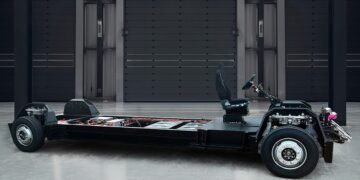
The shift from bespoke retrofits to purpose-built, factory-line vehicles is perhaps the most significant trend. By integrating sensors and computing hardware directly into the vehicle design during mass production—as seen with the Toyota bZ4X Pony.ai model or the Zeekr-Waymo collaboration—automakers can achieve cost savings that after-market modifications could never match .
3. Operational Efficiency
Companies are also finding efficiencies in operations. By partnering with existing ride-hailing platforms, robotaxi companies save on the massive marketing expenses required to build a brand from scratch. Furthermore, remote operation centers, where one supervisor monitors a fleet of vehicles, are reducing labor costs that were once thought to be fixed .
Technological Crossroads: End-to-End AI vs. Safety Redundancy
The technological battle lines of 2026 are clearly drawn. The industry is captivated by the promise of “end-to-end” AI, a method where a single neural network replaces the traditional modular pipeline of perception, prediction, and planning. This approach promises more human-like driving and faster adaptation to new environments.
However, a sobering reality check comes from a recent McKinsey & Company report. It found that 49% of industry experts now believe that the mass market for private cars will stagnate at L2+ (advanced driver assistance) rather than progressing to L3 or L4. This is a massive strategic retreat from previous forecasts .
The reason is the “black box” problem. Pure end-to-end models can make unexplainable decisions, a terrifying prospect for safety-critical systems. The industry consensus is now shifting toward a “hybrid model.” In this architecture, an end-to-end AI proposes a trajectory, but a separate layer of traditional, rule-based algorithm checks the move for safety before execution. Only 22% of experts believe pure end-to-end will dominate, while the majority favor this hybrid approach as the only viable path for high-level autonomy .
Global Race: The U.S.-China Dynamic
The commercial race for robotaxi dominance is a two-horse race, with the United States and China pulling away from the rest of the world.
United States: The Innovators
-
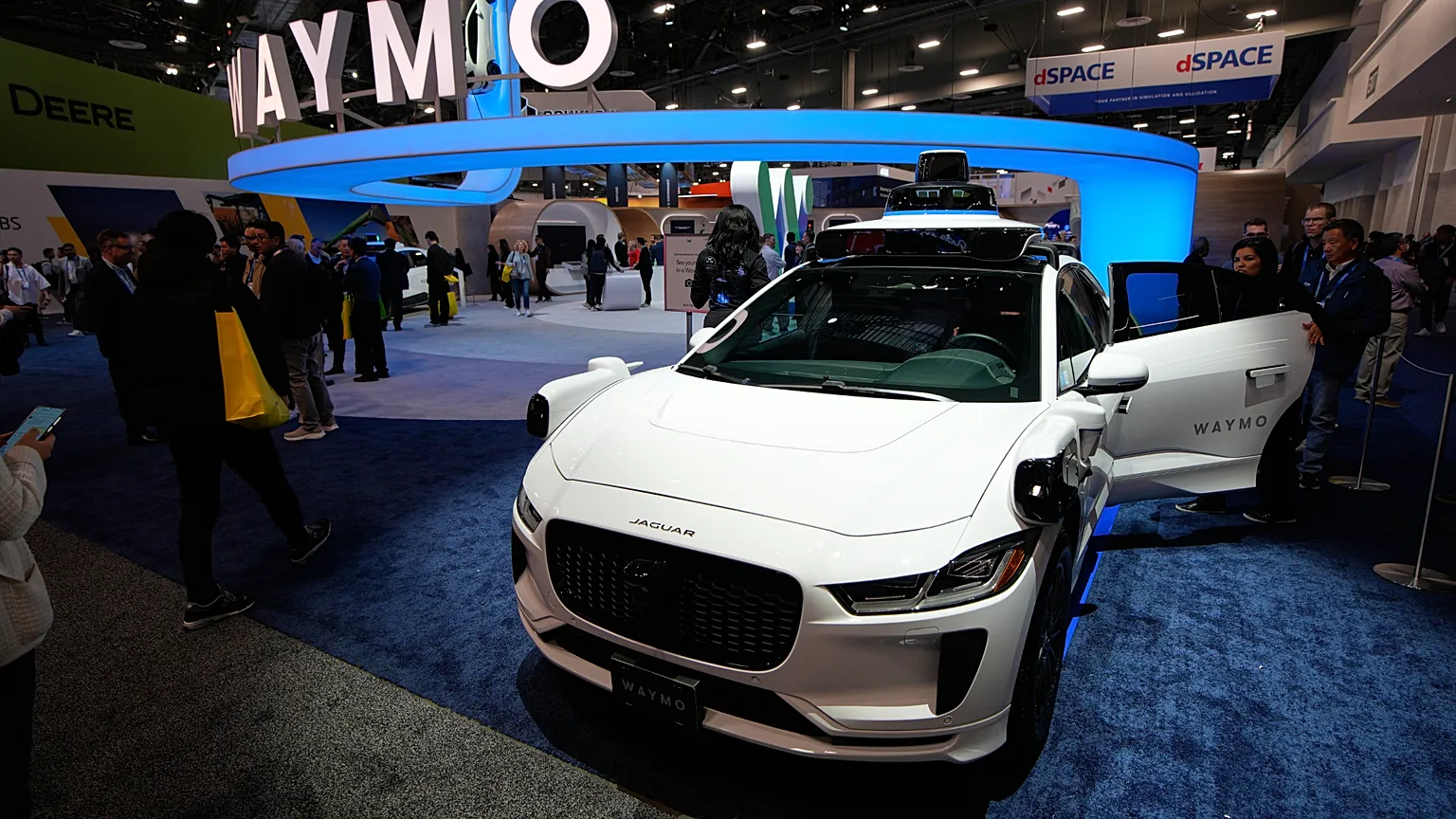
Waymo: The Alphabet subsidiary remains the undisputed leader in the West. With a fresh $16 billion funding round, Waymo is expanding its 2,500+ vehicle fleet and planning launches in over 20 cities, including international forays into Tokyo and London. It currently provides over 400,000 paid rides per week .
-
Tesla: Operating with a fundamentally different “pure vision” philosophy, Tesla is aggressively expanding its service in Texas. However, its path is fraught with challenges as it bypasses the expensive sensor suites that competitors deem essential.
-
Zoox: The Amazon subsidiary is pushing the envelope with its purpose-built, carriage-style robotaxi designed for dense urban environments, devoid of any traditional driver controls .
China: The Ecosystem Powerhouse
China’s advantage lies in its “car-road-cloud” integration strategy, strong government support, and a public highly receptive to new technology.
-
Massive Scale: With the world’s most complex urban traffic environments, China provides the ultimate stress test. Players like WeRide and Pony.ai are not only dominating domestically but are also exporting their solutions to markets like the UAE (Abu Dhabi) .
-
Super-App Integration: The ability to hail a robotaxi directly from apps like WeChat, Alipay, or Gaode gives Chinese companies a massive distribution advantage that Western companies lack.
-
Technological Sovereignty: The McKinsey report highlights a critical geopolitical trend: 74% of experts predict China will develop a technology stack independent from the West, creating two distinct autonomous driving ecosystems .
Beyond Taxis: The Proving Ground of Robobus
While robotaxis grab headlines for navigating the chaos of open roads, the “Robobus” is quietly emerging as the more commercially viable sibling in 2026. Operating on fixed or semi-fixed routes, Robobus presents a “second battlefield” for autonomous driving with a clearer path to revenue .
A. Controlled Complexity
The operational domain of a Robobus is typically less complex than a city-wide taxi service. Whether operating in a scenic spot, a university campus, or a dedicated BRT lane, the reduced complexity allows for a 30% to 50% reduction in development and sensor costs compared to a full-fledged robotaxi .
B. Alignment with Public Policy
Robobuses align perfectly with national strategies for “New Infrastructure” and smart city development. This makes them more likely to receive government subsidies and procurement contracts. The partnership between China’s蘑菇车联 (Mogo.ai) and Singapore to launch an L4 Robobus line is a testament to the exportability of this solution .
C. Standardized Deployment
Companies like Mogo.ai have developed standardized kits that can be installed on various bus models, slashing deployment timelines from 12 months to just one or two. This plug-and-play capability is essential for scaling the technology across different cities and transit authorities .
The Safety Paradox: Can We Trust the Wheel?
As robotaxis proliferate, they are colliding with an unexpected obstacle: public trust. The promise of autonomous vehicles has always been safety removing the error-prone, distracted, or impaired human driver from the equation. Yet, 2026 is witnessing a surge in reported incidents that threaten to undermine this core value proposition .
The Alarming Statistics
Recent data has been sobering. In Austin, Texas, Tesla’s fledgling robotaxi service has been involved in 14 crashes since its launch. Analysis by Electrek estimated the fleet crashes once every 57,000 miles, a rate nearly four times higher than the average human driver . While many of these are low-speed incidents (like backing into fixed objects), they paint a picture of a technology still struggling with fundamental spatial awareness.
A Catalog of Failures
The incidents are not isolated to Tesla. In late 2025 and early 2026, a series of troubling events occurred in China:
-
Beijing (May 2025): A robotaxi caught fire, highlighting potential safety gaps in electric vehicle battery technology and emergency protocols .
-
Chongqing (August 2025): A vehicle drove directly into a municipal construction trench. While the construction site lacked full warnings, a human driver would likely have recognized the anomaly, whereas the vehicle’s perception system failed .
-
Zhuzhou, Hunan (December 2025): The most tragic incident involved an L4 robotaxi striking two pedestrians on a crosswalk, killing one. This raised serious questions about sensor performance under specific conditions (like glare) and algorithmic prediction failures .
The Regulatory and Ethical Gap
These incidents expose a dangerous lag in regulation. Current laws struggle to assign blame. Is it the car manufacturer, the software developer, or the remote operator? The lack of a unified global safety standard for “full autonomy” allows companies to push the boundaries, sometimes at the expense of safety. There is a growing sense that some players are prioritizing market share and data collection over the meticulous, boring work of safety validation .
A. The Human Factor
Furthermore, studies suggest that humans hold autonomous vehicles to a higher standard than themselves. Even if robotaxis achieve statistical parity with human drivers, the public may not accept the types of mistakes they make. A human driver might be forgiven for a fender-bender, but a robotaxi doing the same thing erodes trust in the technology’s premise of superiority .
 Looking Ahead: The Long and Winding Road
As we navigate through 2026, the path forward for robotaxis is becoming clearer, if not easier. The industry has successfully exited the laboratory and is now learning to walk on the streets. The next five years will be defined by a relentless focus on execution.
1. Consolidation and Survival
The immense cost of this race with estimates suggesting over $3 billion in software investment is needed to reach market readiness is filtering out the players. The “competition” pain point is currently the lowest-ranked concern, suggesting that weaker players have already been weeded out. The survivors are in a position to capture a massive value pool .
2. The 2030 Horizon
Forecasts from the Guolian Minsheng Securities and others suggest that while 2026 is the year of take-off, full-scale operational profitability is a 2030 story. It will require not only millions of vehicles on the road but also the full maturation of supportive infrastructure and regulatory frameworks .
3. A Bipolar Future
The future of personal vehicles looks vastly different from robotaxis. While robotaxis aim for L4, private cars will likely settle into a “boring but safe” L2+ standard for the mass market. High-end luxury vehicles may offer L3 as a niche, expensive feature, but the dream of buying a car that drives itself everywhere is receding for the average consumer .
In conclusion, the robotaxi is no longer a hypothesis. It is a physical reality navigating the streets of our cities. It brings with it the promise of unprecedented efficiency and mobility, but also the weighty responsibilities of employment disruption, safety assurance, and ethical governance. The companies that will win this race are not necessarily those with the flashiest demos, but those that can master the grind of cost control, the rigor of safety validation, and the delicate balance of public trust. The commercialization phase has begun, and the world is watching to see who will navigate the crossroads ahead.